Veterinary SurgeryRefer a case
For pet owners · Kentucky & Southern Indiana
Specialty surgery at the veterinary clinic your pet already knows
Surgery can feel overwhelming. Kentucky Veterinary Surgery (KVS) makes it a little easier: board-certified surgeon Dr. Joshua A. Bruce, DVM, DACVS-SA, comes to your own veterinarian's clinic, so your pet has surgery with the people and place they already know.
01
What specialty surgery at your own vet's clinic means for you
- Your pet stays local. Surgery is done in your veterinarian's operating room, not at a large specialty hospital.
- The specialist comes to your vet. Dr. Bruce brings his own sterilized specialty equipment, the implants needed for the procedure, and two surgical assistants.
- Your vet's team stays involved. A member of your clinic's team runs anesthesia, and your veterinarian remains your pet's primary doctor before and after surgery.
- You hear from the surgeon personally. Dr. Bruce calls you before and after surgery.
02
How to get referred
Ask your primary veterinarian for a referral to Kentucky Veterinary Surgery. Because surgery happens inside your veterinarian's clinic, your vet's clinic schedules the surgery and provides your estimate. KVS can't schedule or give estimates directly, and Dr. Bruce needs a referral from your veterinarian before he can advise on your pet. Booking times vary, but surgery is usually scheduled about 2–4 weeks out.
Not sure whether your veterinarian works with KVS? See our partner clinics.
03
What to expect, step by step
Before surgery
Your veterinarian examines your pet, decides whether surgery may help, and refers the case to KVS. Bloodwork and radiographs are often done beforehand.
Your vet's clinic schedules the surgery day and gives you the estimate.
The owner will complete the consent form at the clinic on the day of surgery.
For TPLO surgery, you'll also get a video from Dr. Bruce about a week before surgery explaining the procedure and recovery. Learn more about TPLO.
Day of surgery
Drop your pet off at your regular veterinarian's office. Their team prepares your pet for surgery.
Dr. Bruce examines your pet and calls you before surgery to go over the plan and answer any last questions.
After surgery, Dr. Bruce calls again to explain what he found, what was done, and the plan for the rest of the day.
Your clinic's team recovers and monitors your pet. Depending on the procedure, most pets go home that evening with written discharge instructions. Some procedures are different: for example, many dogs having portosystemic shunt surgery need 24-hour hospital care for a day or two afterward, and some abdominal surgery patients are transferred for overnight care.
After surgery
Follow the discharge instructions closely. Rechecks happen at your primary veterinarian's clinic, usually starting at about 2 weeks for suture removal.
Your veterinarian and Dr. Bruce stay in close contact about your pet's recovery, and Dr. Bruce stays available to you after surgery.
04
Home recovery basics
Every procedure has its own recovery plan, and your pet's discharge instructions always come first. In general:
Protect the incision. An e-collar or garment is often used to prevent licking until the incision heals.
Restrict activity. After orthopedic surgery, expect weeks of leash walks only, with no running, jumping, or stairs. After TPLO, plan on about 2 months of restriction.
Keep up with rechecks at your veterinarian's clinic.
Call your veterinarian if you notice anything that worries you, such as vomiting, lethargy, loss of appetite, or a change at the incision.
See the recovery section of each procedure page for details:
Orthopedic: TPLO, lateral suture, patellar luxation, FHO, fracture repair
05
Why board certification matters
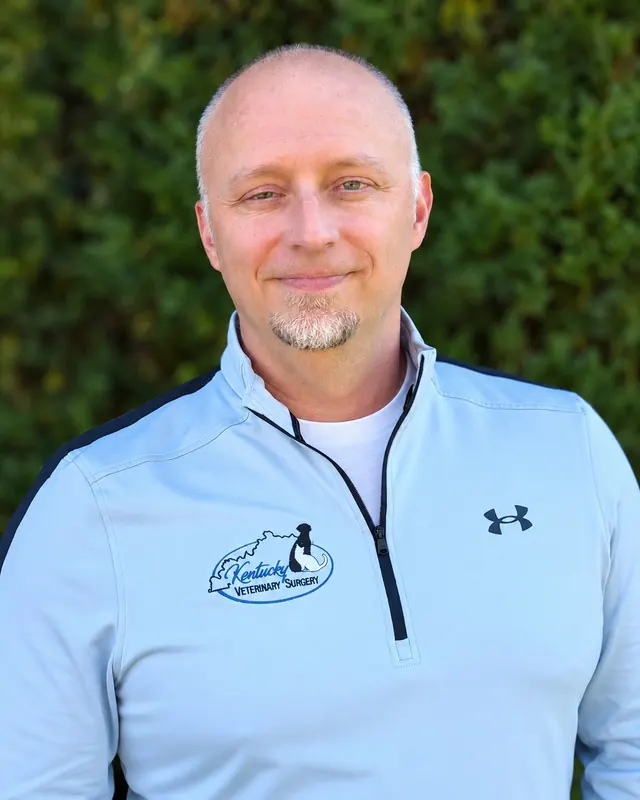
Dr. Bruce completed about six years of additional training after veterinary school, including a rotating internship, a surgical internship, and a surgical residency, and became board certified by the American College of Veterinary Surgeons in 2017. Board certification means a veterinarian has completed an approved residency, met the ACVS credentialing requirements, and passed its examination. Not every veterinarian who performs advanced surgery is a board-certified surgeon. Dr. Bruce has performed thousands of TPLO procedures and performs hundreds of surgeries each year. Meet Dr. Bruce.
Guides
Printable guides for pet owners
General guidance only. Your veterinarian's case-specific instructions take precedence.
Common questions
Common questions from pet owners
How do I get my pet seen?
Ask your primary veterinarian for a referral to Kentucky Veterinary Surgery. Your vet's clinic handles scheduling and provides your estimate, and once your pet is referred, Dr. Bruce will call you before and after surgery.
How soon can surgery be scheduled?
Booking times vary, but surgery is usually scheduled about 2–4 weeks out. Your veterinarian's clinic schedules the surgery.
Will my pet go home the same day?
Depending on the procedure, most pets go home that evening. Some procedures, such as portosystemic shunt surgery, often need 24-hour hospital care afterward.
Who gives anesthesia?
A member of your veterinarian's team runs anesthesia, while Dr. Bruce and his two surgical assistants perform the surgery.
Does KVS handle emergencies?
No. For an emergency, call your veterinarian during business hours or an emergency hospital after hours.
Next step
Start with the veterinary team who knows your pet.
Pet owners should contact their primary veterinarian. Veterinary teams can submit records and case details directly to KVS.
Find a partner clinic