Veterinary SurgeryRefer a case
Client guide · For pet owners
Preparing Your Home for TPLO Surgery
Your dog's recovery starts before surgery. A little planning now can make the first weeks of recovery safer and more comfortable. Use this guide to get your home ready before your dog's surgery day.
01
Set up a safe recovery space
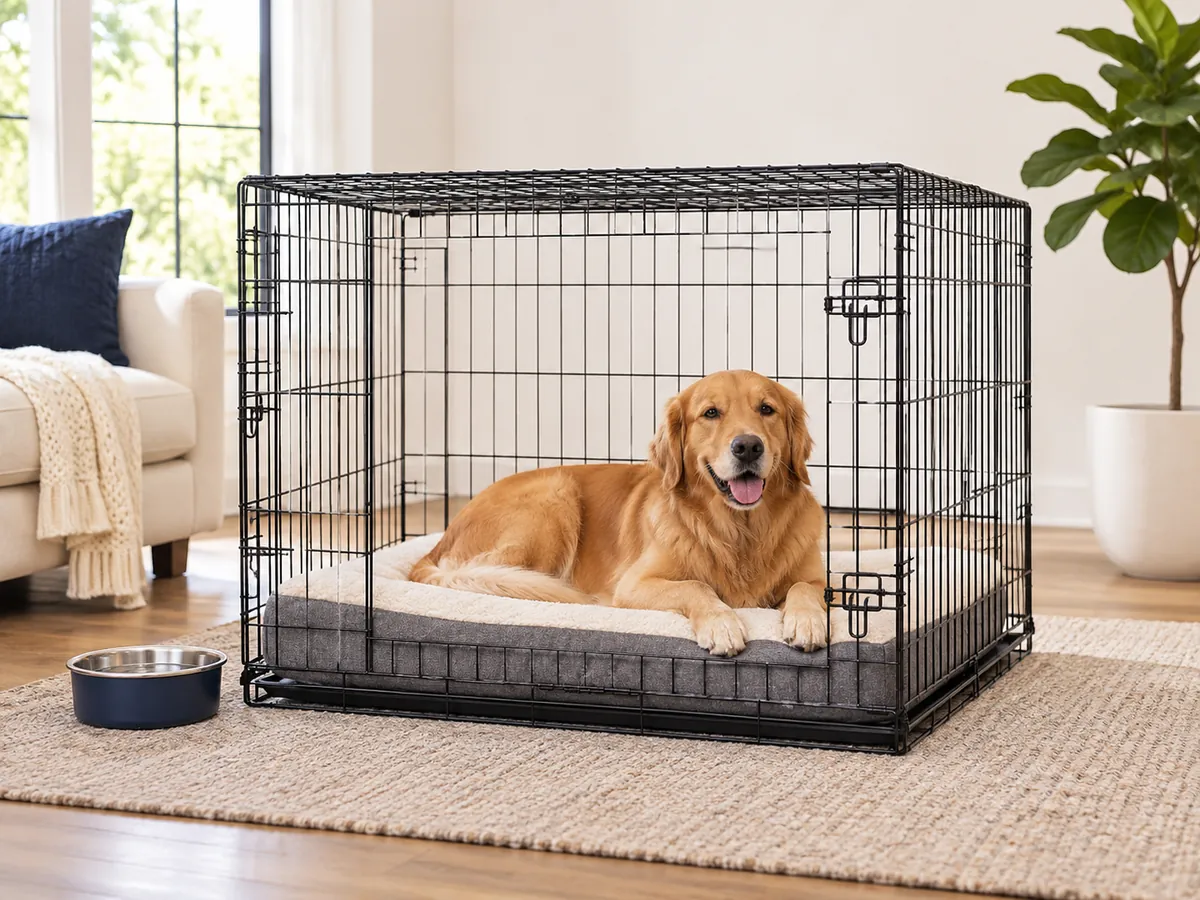
Choose a comfortable, confined area where your dog can rest without running or jumping. Plan for approximately 8 weeks of controlled activity, or as directed by your veterinarian.
Good options
- Crate or kennel: Room to stand, turn, and lie down.
- Exercise pen: Small, secure, and stable.
- Small gated room: With good, stable footing and no accessible furniture for jumping.
Inside the space
- Supportive, washable bedding
- Fresh water in easy reach
- Non-slip flooring and no clutter
- Enough room to rest while wearing an E-collar
02
Keep stairs to a minimum
Arrange for your dog to stay on one level of the house whenever possible. Relocate their sleeping area, block staircases with baby gates, and choose a nearby exit for potty breaks.
If a few entry steps are unavoidable, use a short leash and appropriate support. Discuss unavoidable flights of stairs with your veterinary team before surgery. Never allow unattended stair use.
03
Have a sling or towel ready
A sling provides light assistance while your dog stands and walks. Have a rear-support sling, large bath towel, or a Help 'Em Up Harness available. We particularly like the Help 'Em Up Harness because it can stay on throughout recovery for quick support as needed.
Using a bath towel
- Fold a large towel lengthwise into a wide strip.
- Place it beneath the abdomen, just ahead of the hind legs, avoiding the incision.
- Hold both towel ends in one hand and the leash in the other.
- Maintain light upward tension — approximately 5 pounds of pressure — to help catch your dog if they slip, before they hit the ground.
Towel in one hand • Leash in the other
Think safety net, not lifting device. Your dog should continue using their legs. The towel is there to stabilize them if they lose balance.
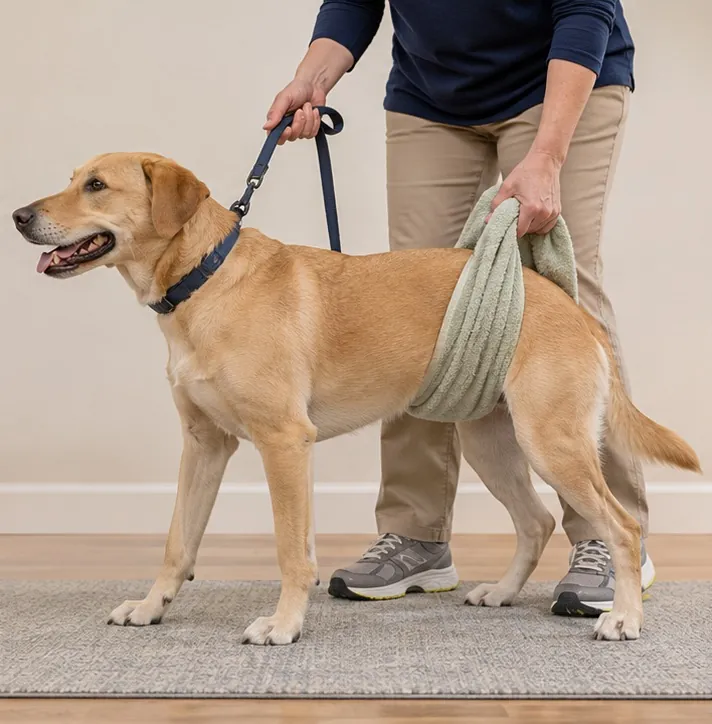
Light support can help prevent slips during the first days at home.
04
Improve traction
Hardwood, tile, and laminate can be slippery after surgery. Create a safe path from the recovery space to the outside door with rubber-backed runners, rugs, or yoga mats.
Make sure rugs lie flat and cannot slide. Avoid slick or muddy areas outdoors.
A clear, non-slip route and blocked staircase can make every trip outside safer.
05
Prevent sudden activity
No jumping, running, chasing, rough play, or unsupervised outdoor time.
Keep your dog off beds and sofas, and use a short leash for every outdoor trip — even in a fenced yard.
Separate pets when play could become energetic. Always take other household dogs outside at different times from your recovering dog to prevent excitement or accidental collisions.
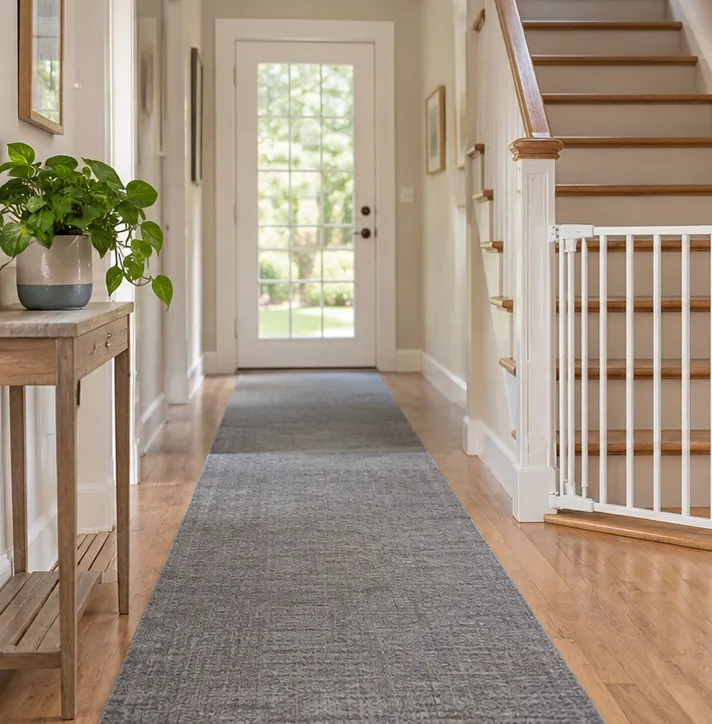
A runner rug and baby gate can reduce the risk of slipping or stair use.
06
Plan short bathroom breaks
Choose a nearby, flat and obstacle-free potty area with as few steps as possible. Keep every bathroom break brief and controlled on a short leash. Use the towel or sling as needed to maintain balance.
07
Prepare for an E-collar
We recommend an appropriately fitted Elizabethan collar (E-collar or cone) for every dog. Licking or chewing the incision can cause infection and delayed healing.
The E-collar should remain on continuously until the incision has healed, unless your surgical team provides different instructions. Make sure your recovery space accommodates the collar, and keep the incision clean and dry as directed.
08
Keep recovery calm
Active dogs may find confinement frustrating. Provide companionship, a predictable routine, and calm enrichment such as approved lick mats or food puzzles that do not encourage excess movement.
Arrange help for the first days at home if needed. If your dog is especially energetic, anxious in confinement, or unable to settle, let your veterinarian know. Medication to help your dog remain calm may be appropriate.
09
Plan the ride home
Your dog may be groggy or unsteady after anesthesia. Plan a safe way into and out of the vehicle; never allow jumping. The towel or sling can help stabilize your dog during vehicle entry and exit, although some dogs will also need hands-on lifting assistance.
Use a non-slip surface inside the vehicle. A properly sized, secured travel crate can limit movement during the drive, especially when another person is not available to help. Ask your veterinary team about a safe lifting plan if you have concerns.
Most important
Most important
Your dog may feel ready for normal activity well before the bone has healed. Continue the activity restrictions and follow the rehabilitation plan provided by your veterinary team, even if your dog appears comfortable.
Keep this page handy
Your pre-surgery home checklist
Work through these items before your dog's TPLO so you can focus on helping them rest and recover after surgery.
- Set up a crate, exercise pen, or small recovery room with stable footing.
- Provide comfortable, washable bedding and easy access to water.
- Arrange for your dog to stay on one level of the house.
- Block stairs with secure baby gates where needed.
- Have a large towel, support sling, or Help 'Em Up Harness ready.
- Place non-slip runners or rugs along walking paths.
- Choose a flat, nearby bathroom area with minimal steps.
- Prevent access to beds, couches, and other jumping opportunities.
- Plan separate outdoor trips for your other household dogs.
- Have an appropriately fitted E-collar available.
- Plan safe transport home with sling assistance and, if useful, a secured crate.
- Arrange assistance and supervision for the first days of recovery.
Have questions before surgery?
Every home — and every dog — is different. If you are unsure about stairs, confinement, lifting, or providing support, contact your veterinary team before surgery so you can plan safely.
The goal
A safe space. A steady footing. A calm recovery.
With a few thoughtful changes at home, you can help protect your dog's healing knee.
Remember: Feeling better does not mean fully healed. Follow the discharge and rehabilitation instructions provided for your dog.
Next step
Start with the veterinary team who knows your pet.
Pet owners should contact their primary veterinarian. Veterinary teams can submit records and case details directly to KVS.
Find a partner clinic